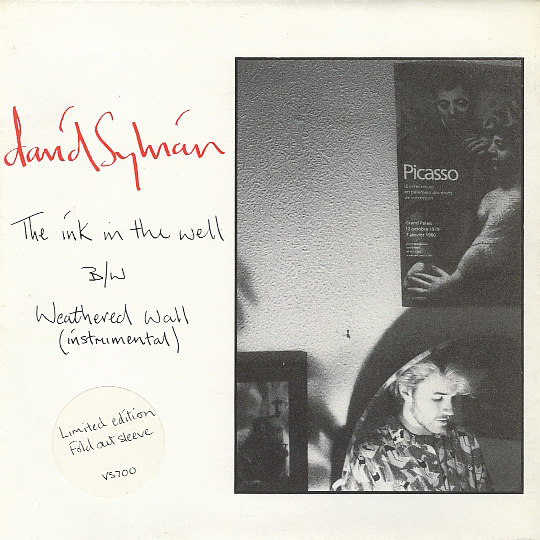
On this date in 1984, THE INK IN THE WELL by DAVID SYLVIAN entered the UK Singles Chart at #37 (Aug 14, 1984).
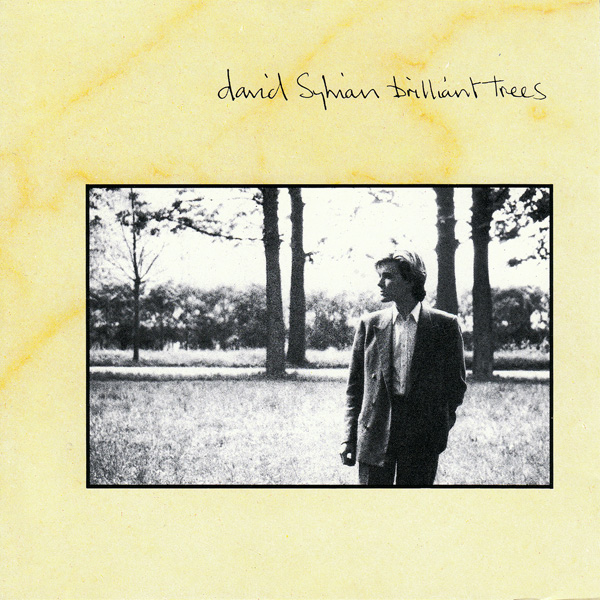
"The Ink in the Well" is the evocative second single from David Sylvian's stunning 1984 solo debut, Brilliant Trees.
Sylvian had retreated to Berlin in 1983 to write new material, later recalling he felt he had "just under an album's worth" after his time there. Seeking to fill out Brilliant Trees, he added a few more songs upon returning to London, including the smooth yet unpredictable "The Ink in the Well".
From its opening bars, "Ink" showcases Sylvian's cinematic approach. Veteran double bassist Danny Thompson, known for his work alongside Nick Drake and John Martyn, provides a mellow rhythmic base as Sylvian's evocative keyboard melody enters. The singer was determined to foster a collaborative spirit in-studio, allowing talented guests like Thompson to imprint their distinctive styles. "I tried to create an atmosphere where musicians would want to contribute something to what I'm doing," Sylvian explained.
This spirit sparked Thompson to suggest bringing in revered flugelhorn player Kenny Wheeler, who adds moving textures alongside the double bass. Rounding out the personnel, drummer Steve Jansen, Sylvian's Japan bandmate and brother, gracefully propels the rhythm while guitarist Phil Palmer delicately ornaments the melody.
Sylvian proudly deemed "Ink" the easiest track to record for Brilliant Trees, a testament to his knack for bringing eclectic players together. "I know how to mix ingredients, different kinds of people from different areas," he stated. Palmer, accustomed to studio work, described Sylvian's chord structures as "odd" and "invented", allowing for captivating vocal melodies. Jansen's exquisite brushwork proved a pleasant surprise for Thompson: "I heard this young drummer play brushes so well...good thing I didn't say 'What a crap drummer!'"
Lyrically, "Ink" finds Sylvian ruminating on creation in the face of destruction, inspired by Pablo Picasso's bombshell 1937 painting Guernica. Responding to the Nazi bombing of a Basque village amid the Spanish Civil War, Picasso conveyed both visceral horror and enduring hope. Sylvian's opening lines place us amid the smoldering aftermath, the Spanish master beginning his unflinching artistic response.
References to works by Jean Cocteau and Jean-Paul Sartre, artists also reacting to the tensions of the era, underscore this stirring setting. For Sylvian, Guernica was less about precise symbolism than the feelings it evoked. "It's based on the feelings I get from the painting," he clarified. Still, potent images like an energetic rabbit and lights "smoulder[ing] through hills and vales" shine a light on the imaginative spirit thriving even amidst despair.
Thought-provoking phrases from 19th century poets reinforce the theme. Sylvian's lyrics suggest creation can provide solace and meaning, a spark of light even in darkness. "Once again, the quote is borrowed," he wisely concludes. For Sylvian, varied creative sources, from literature to fine art, fuelled his own work. "You build this up within you," he mused. "Once it gets to the top you just need one small thing to spark it off."
With its rich musical textures and layers of meaning, "The Ink in the Well" overflowed with inspiration. Visually, Sylvian collaborated with photographer Anton Corbijn on an enigmatic video filmed at the cliffs of Beachy Head in southern England. Mirroring the lyrical references to sleep and dreams, the singer is shown slumbering and arising at various points, wandering near the precipice. Cryptic written passages flash across the screen, one stating "there is always something to be done...even if it is sitting still and willing it to happen."
For Sylvian, such oblique imagery allowed listeners to interpret freely. "The visuals tend to detract from the music itself because you are supplying the listener with a fixed image when they should have the freedom to make the piece...a very personal thing," he astutely observed. Yet for those drawn into the song and seeking to delve deeper, the video provides added dimension.
Upon release, critics praised the single as proof of Sylvian's rapid artistic growth. Eden, reviewing for Record Mirror, lauded the song's "endearing lyrics" and "interesting jazzy interlude", epitomizing the singer's emerging solo sound.
Now, with decades of hindsight, "The Ink in the Well" stands tall in Sylvian's early catalog. Tasteful acoustic instrumentation, penetrating lyrics, and inspired performances make it a highlight of Brilliant Trees and an exemplar of his transition from new romantic frontman to sophisticated singer-songwriter. For any artist, creation is an act of turning inward. With "Ink", Sylvian drew from deep wells of experience and emotion, crafting a compelling response to the world around him. Though he modestly deemed it an "easy track", its wealth of ideas yield rich rewards for listeners today.
The lights of the ashes smoulder through hills and vales
Nostalgia burns in the hearts of the strongest
Picasso is painting the ships in the harbour
The wind and sails
These are years with a genius for living
The rope is cut, the rabbit is loose
(Fire at will in this open season)
The blood of a poet, the ink in the well
(It's all written down in this age of reason)
The animals run through harvested fields of fire
The bitterness shown on the face of the homeless
Picasso is painting the flames from the houses
The sudden rain
These are years with a genius for living
The rope has been cut, the rabbit is loose
(Fire at will in this open season)
The blood of a poet, the ink in the well
(It's all written down in this age of reason)




 在線雷達
在線雷達


 發表於 2023-8-16 23:04:33




 廣播
廣播 置頂
置頂 超級提昇
超級提昇 強效提昇
強效提昇 推舊帖
推舊帖 收嗲鳥
收嗲鳥 油顏色
油顏色