Zion National Park is located in the Southwestern United States, near Springdale, Utah. A prominent feature of 590 Km2 Park is Zion Canyon, which is 24 km long and up to 800 m deep, cut through the reddish and tan-colored Navajo Sandstone by the North Fork of the Virgin River. The lowest elevation is 1,117 m at Coal pits Wash and the highest elevation is 2,660 m at Horse Ranch Mountain. Located at the junction of the Colorado Plateau, Great Basin, and Mojave Desert regions, the park's unique geography and variety of life zones allow for unusual plant and animal diversity. Numerous plant species as well as 289 species of birds, 75 mammals and 32 reptiles inhabit the park's four life zones: desert, riparian, woodland, and coniferous forest. Zion National Park includes mountains, canyons, buttes, mesas, monoliths, rivers, slot canyons, and natural arches.
[youtubeHD=640,420]SyLo5BrmzcE[/youtubeHD] The new name, Zion, had greater appeal to an ethnocentric audience. The United States Congress established the monument as a National Park on November 19, 1919. The Kolob section was proclaimed a separate Zion National Monument in 1937, but was incorporated into the park in 1956.
The geology of the Zion and Kolob canyons area includes 9 formations that together represent 150 million years of mostly Mesozoic-aged sedimentation. At various periods in that time warm, shallow seas, streams, ponds and lakes, vast deserts, and dry near-shore environments covered the area. Uplift associated with the creation of the Colorado Plateaus lifted the region 3,000 m starting 13 million years ago.
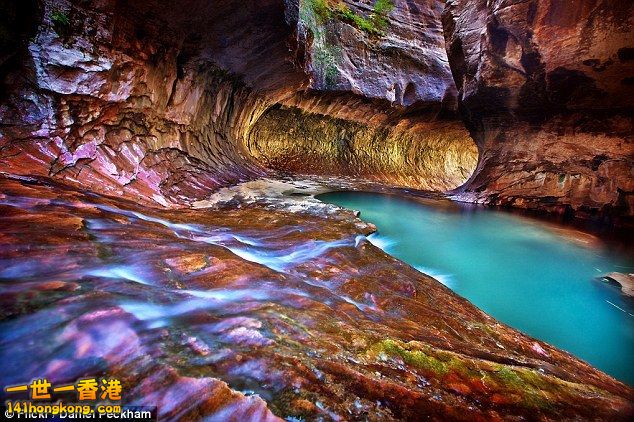
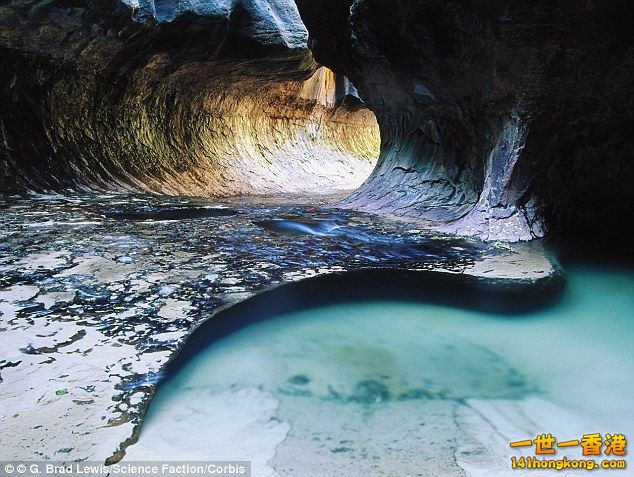
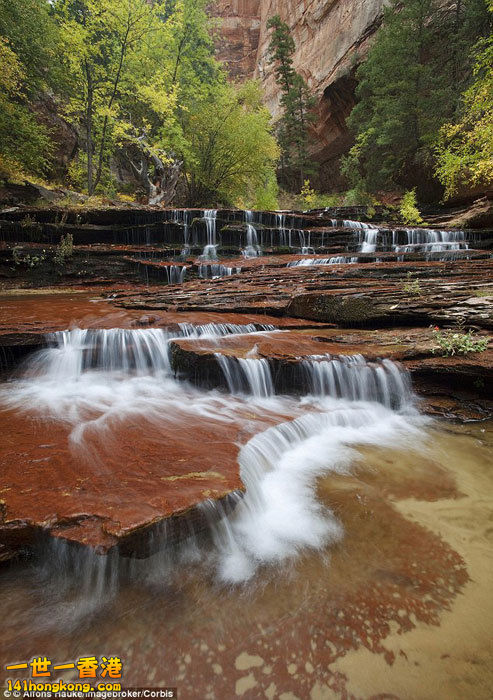
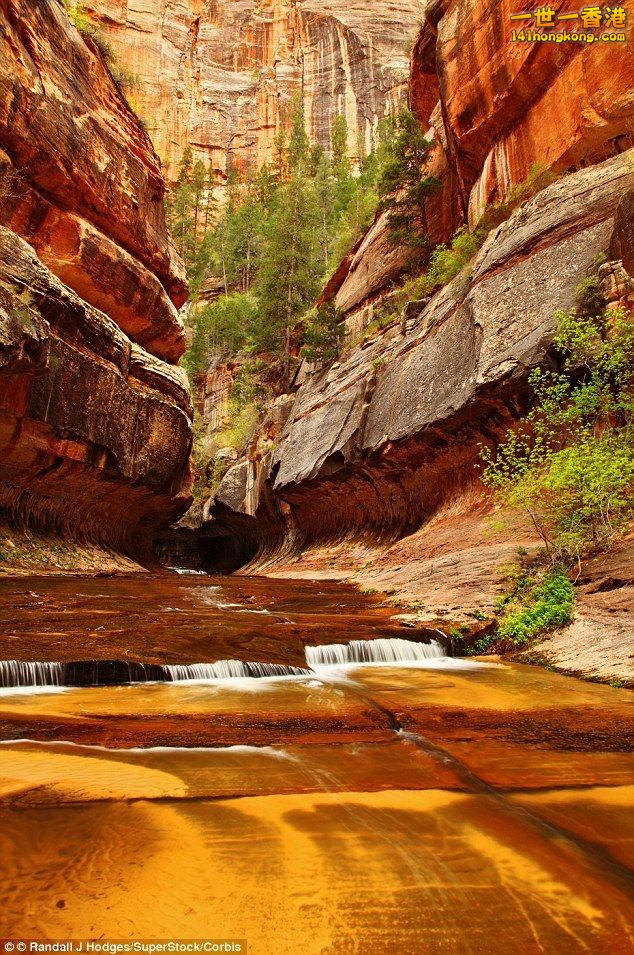
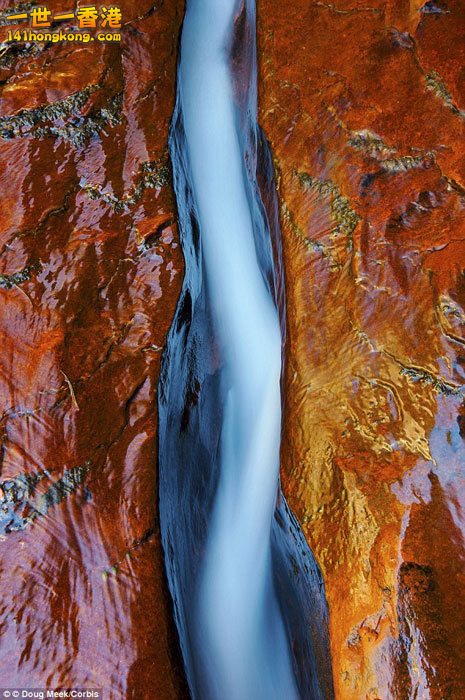
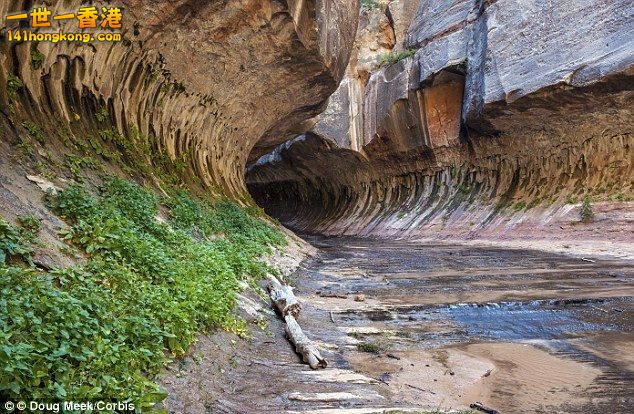
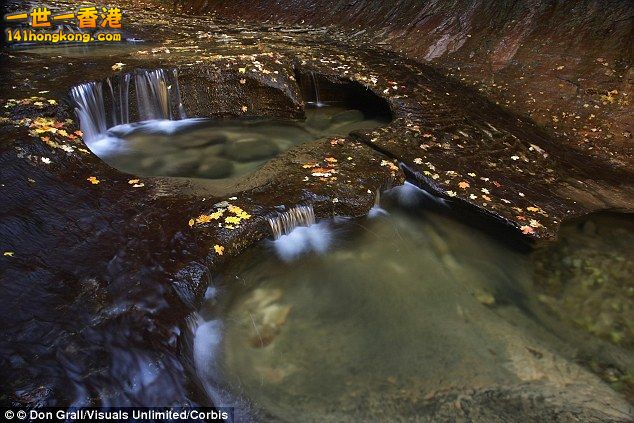
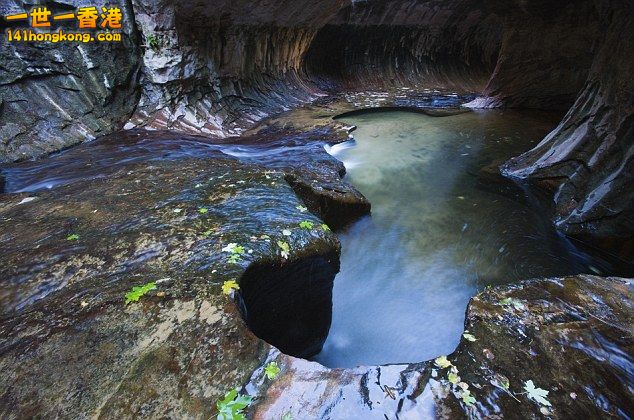
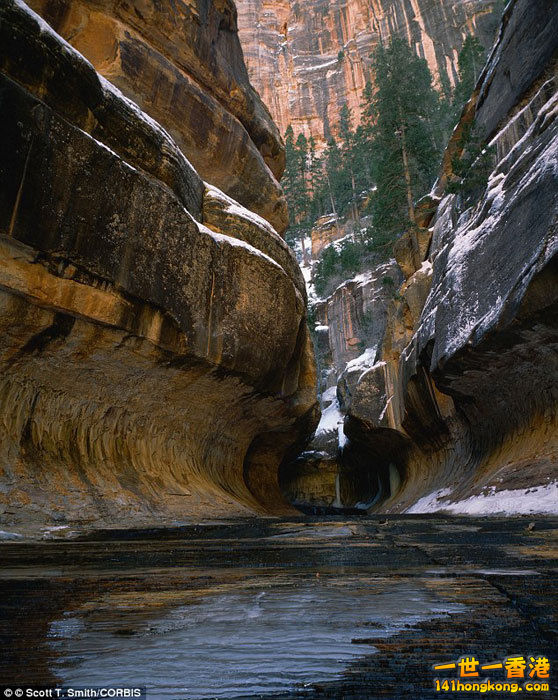
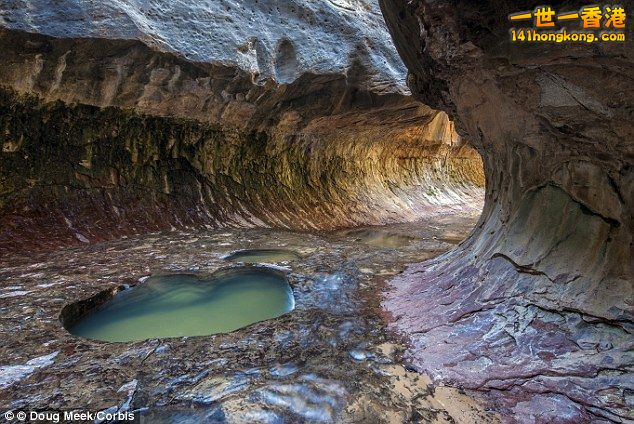
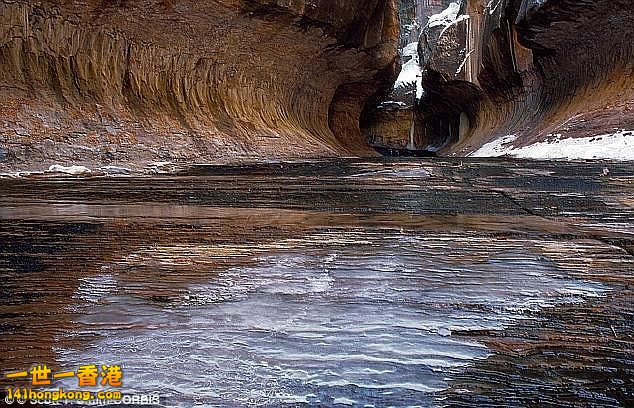
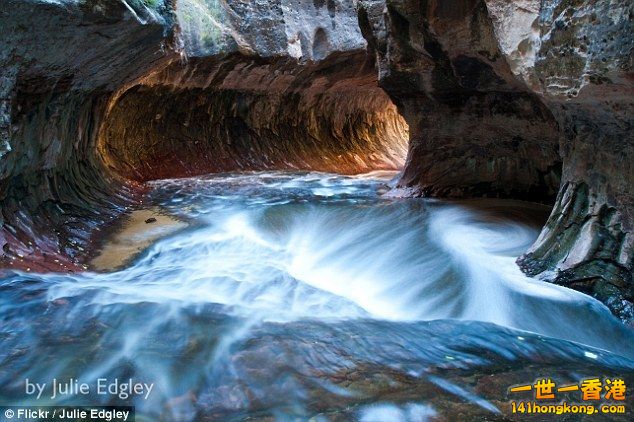
A stunningly beautiful canyon in Utah's Zion National Park has become so popular that park officials have instituted a lottery for hikers who want to discover its untouched natural beauty.
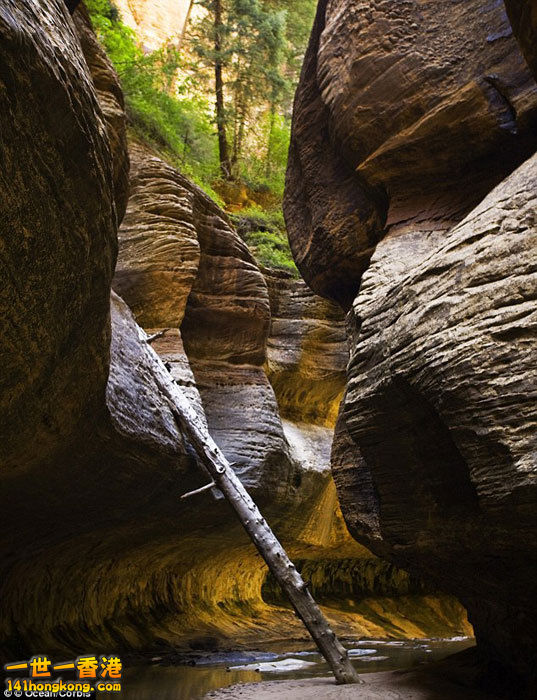
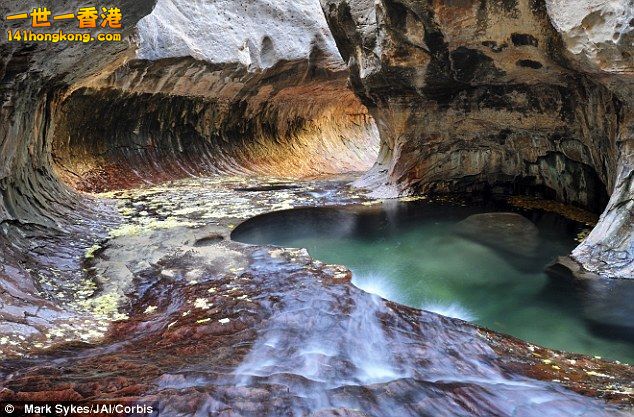
Down between two peaks called the North and South Guardian Angels, the Subway's low light is the perfect place for algae to grow in vibrant and rich greens.
The park is issuing 80 permits a day to hikers who want to visit the cylindrical slot canyon. The lottery will only be done between peak seasons between March and November when demand to journey to the gorgeous canyon is at its highest.Groups are limited to fewer than 12 people.
The subway itself is roughly a quarter mile long, but finding your way to the canyon can be difficult.The hike is 9.5 miles round trip, and is more difficult than a novice hiker should attempt on their own.
Hikers will face route finding, creeks that need crossing, and boulders that must be scaled. ***It's even more difficult to reach The Subway if you attempt to do it from the top down, as hikers will need to rappel on route as well as swim through pools of cold water that will likely have debris.
But if the images that have come out are at all accurate, the beautiful scenery is worth the hardship of reaching it.




 在線雷達
在線雷達


 發表於 2013-3-14 17:14:12
 廣播
廣播 置頂
置頂 超級提昇
超級提昇 強效提昇
強效提昇 推舊帖
推舊帖 收嗲鳥
收嗲鳥 油顏色
油顏色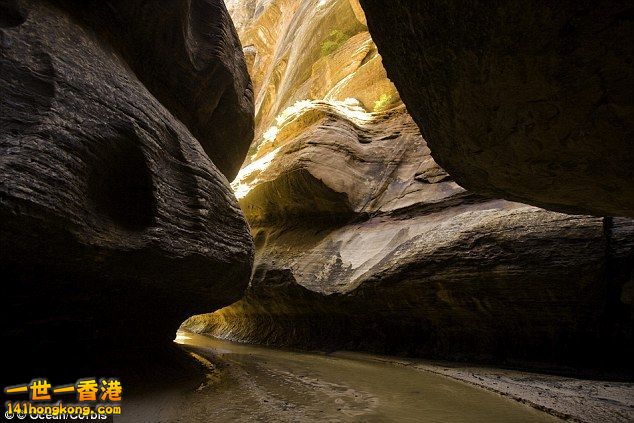








 發表於 2013-3-14 18:38:54