|
|
 發表於 2018-8-12 20:56:47
|
顯示全部樓層
發表於 2018-8-12 20:56:47
|
顯示全部樓層
本帖最後由 tigerb 於 2018-8-12 21:32 編輯
How many recorded fights are there between grizzly bears and tigers? Which one has more wins?
How many recorded fights are there between grizzly bears and tigers?
The Amur tiger and the Ussuri brown bear coexist in Russia, both have shown evidence of predation and competition upon one another.
There are many detailed accounts and records of tigers attacking and killing bears and vice versa. The conclusion we can draw from these records is that tigers have attacked and killed more bears.
Today, we shall discuss accounts favouring both sides for an analysis:
Accounts favouring the bear
The factual book series called Mammals of the Soviet Union describes one instance of a bear killing a tiger.
In 1956, a three-year old tiger was killed by a bear in a predatory attack:
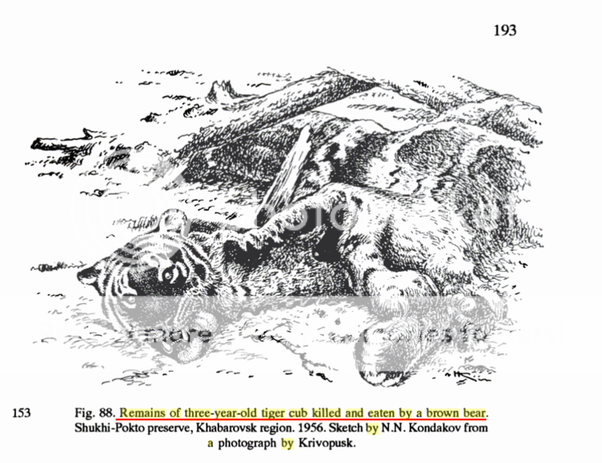
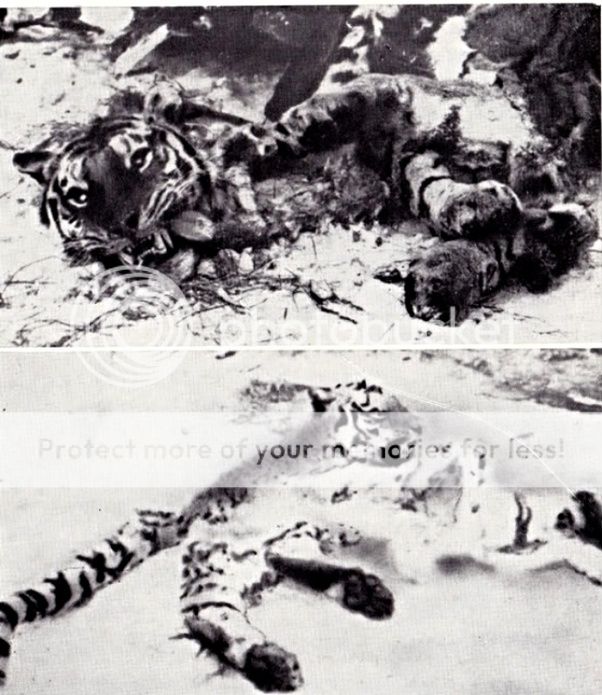
Source: https://books.google.com.au/book ... %20bear&f=false
The factual novel series called Mammals of the Soviet Union cited three different instances of bears killing tigers.
in 1957, a young tiger was killed in a fair fight with a roaming bear.
In 1960, an adult tigress was killed while defending her cubs from a bear.
In 1962, another young tiger was killed in combat with a large bear:
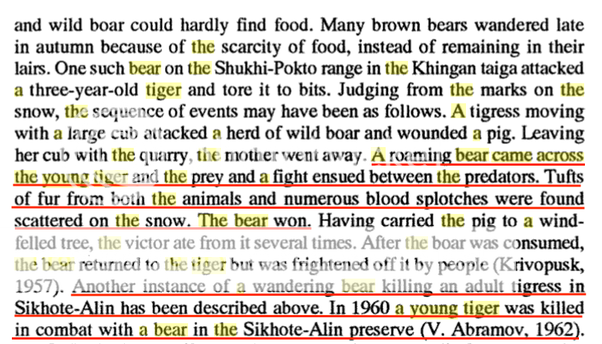
In 1962, the young tiger’s footprints were discovered shortly before his mortal fight with a large bear:

Source: https://books.google.com.au/book ... 20tiger&f=false
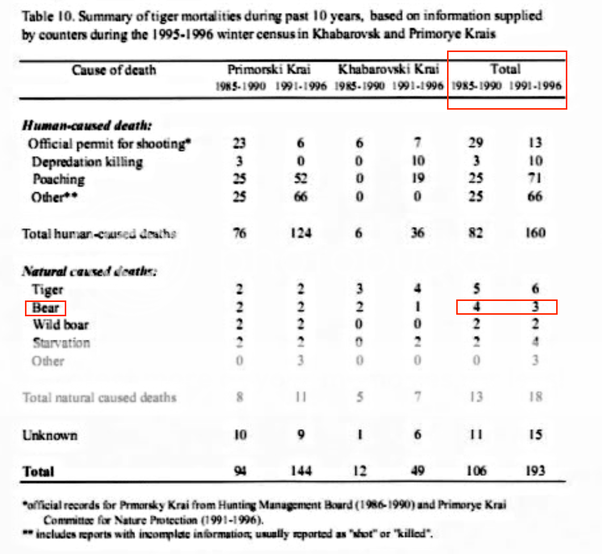
Between 1985 and 1996, a mortality study of Siberian tigers was conducted.
It was found that seven tigers were killed by bears in that time period:
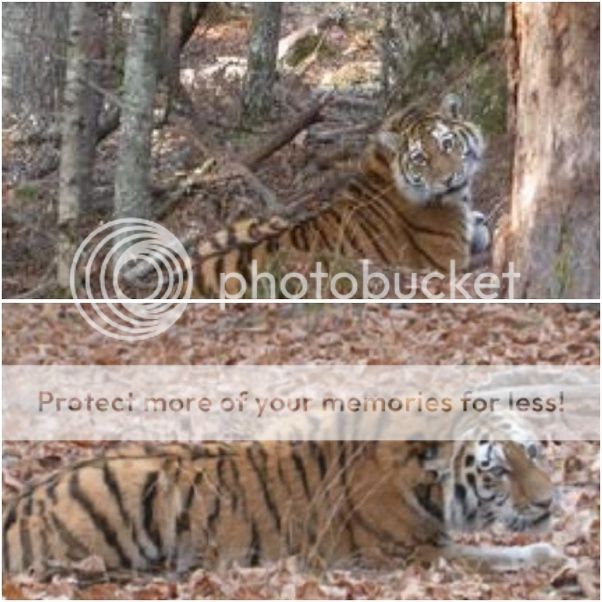
In 2010, a two and a half-year old tigress named Anya was killed by a bear:
The Kolumbe River basin is perhaps the least accessible area of the reserve, with no trails or cabins. For this reason, on February 17th, Siberian Tiger Project specialists took a helicopter out to the place where Anya’s last location was taken, to determine what went wrong. We had all been hoping that Anya simply lost her collar. However, when our specialists reached the ground, they discovered that Anya had been killed and eaten by a bear.
It is very disappointing to lose a beautiful, healthy young tigress, who had just begun to live on her own, and could have had many litters of cubs in her lifetime. Our only consolation is that hers at least was a natural death.
Source: https://russia.wcs.org/en-us/Abo ... ID/98/OUR-LOSS.aspx
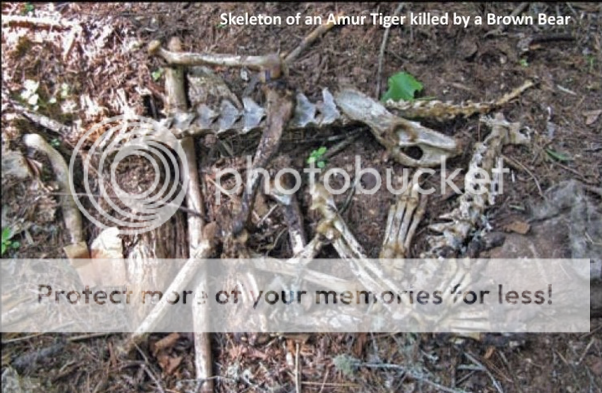
Skeleton of a Siberian tiger killed by a brown bear:
Accounts favouring the tiger
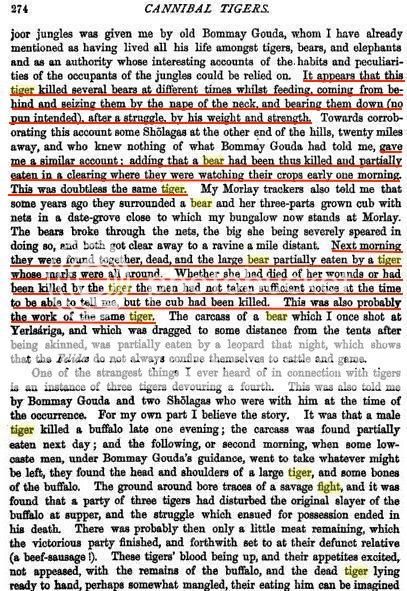
In 1882, the factual novel called Thirteen Years Among the Wild Beasts of India published multiple accounts of tigers killing bears.
Multiple bears were ambushed and killed by the tiger, including a large female and her cub:
Source: https://books.google.com.au/book ... 20tiger&f=false
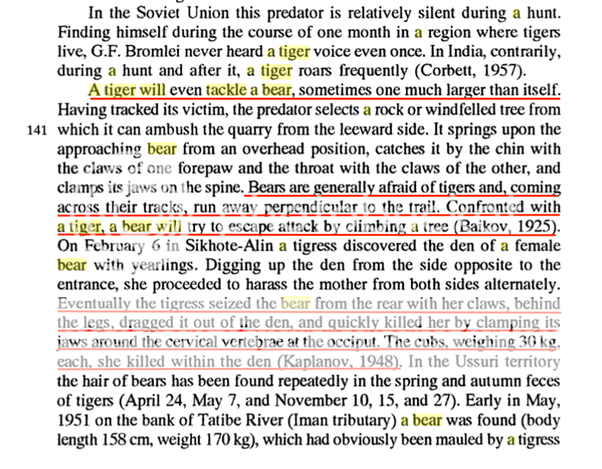
The factual novel series called Mammals of the Soviet Union explains an account of a tigress killing a sexually mature female bear and her cubs.
In 1948, a tigress killed a motherly bear and her two yearlings:
Source: https://books.google.com.au/book ... tigress&f=false
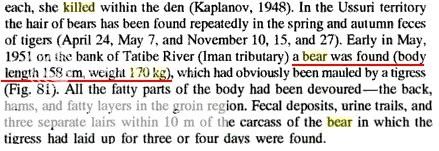
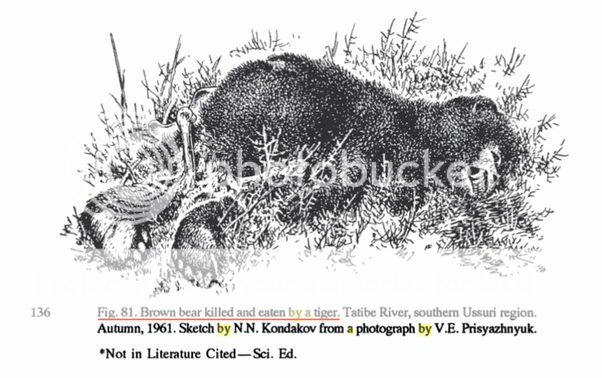
The factual novel series called Mammals of the Soviet Union describes an account of a bear being killed by a tigress.
In 1961, a 170 kilogram bear was killed by a tigress who raided its den:
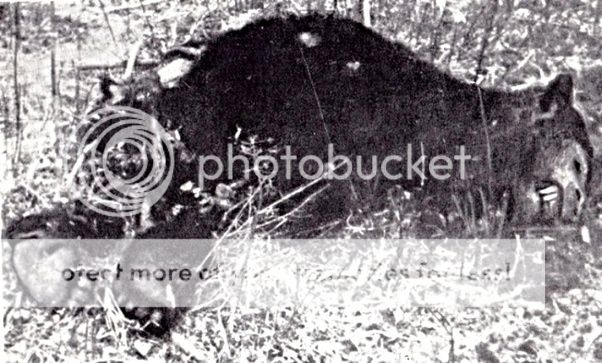
Source: https://books.google.com.au/book ... 20River&f=false
In 2009, a factual novel called The Better to Eat You With published an account of a bear being killed by a tiger.
The bear was an adult specimen:

Source: https://books.google.com.au/book ... limbers&f=false
In 2009, a video uploaded to YouTube showed the finding of a carcass of a large bear that was killed by a tiger.
The video uploader alleged the bear to be a large male weighing 800 to 900 pounds:
[youtubeHD=900,600]qD49KJWsk-Y[/youtubeHD]


A brown bear killed and partially consumed by a tiger:


Another brown bear was found after being killed by a tiger:
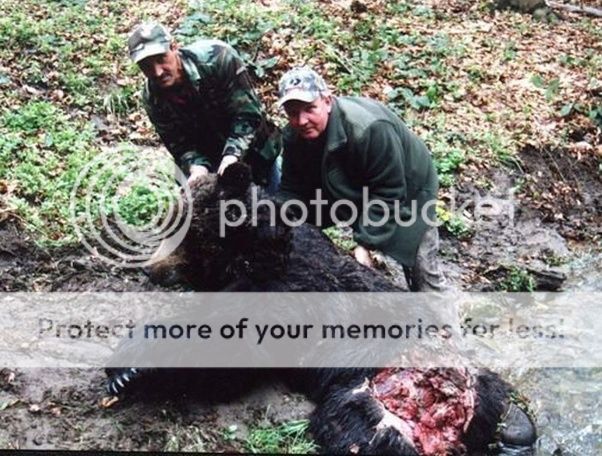
Which one has more wins?
According to this data, the Amur tiger generally holds the advantage over the Ussuri brown bear in Russia:
In the Russian Far East, the Amur tiger (Panthera tigris altaica), brown bear (Ursus arctos) and Asiatic black bear (U. thibetanus) all share the same habitat. These three species all prefer deciduous and mixed wood forests. In the Sikhote-Alin protected area, the relationship between bears and a tiger were studied during extensive telemetry research in the region. During the non-denning period bears scavenged 16.7% of surveyed tiger kills (n=427). Brown bears scavenged tiger kills 6.7 times more often, than Asiatic black bears. The frequency of autumn scavenging by bears was less than spring (X2 = 8.7, df= 1, p= 0.003) and summer (X2 = 10.5, df= 1, p= 0.012). In 44.4% of cases the bears scavenged tiger kills only after the tiger had abandoned the kill site. In at least 4 cases (11.1 %) bears displaced tigers from a kill, while in 4 cases both tigers and bears utilized the kill during the same period. Analysis has shown that 2.1% of bears diet is obtained from tiger kills, 1.4% for brown bears and 0.7% from Asiatic black bears. In 44 recorded encounters between tigers and bears, the tiger initiated contact in 12 cases while the bear initiated contact in 8 cases. Of these encounters, 50% resulted in the death of the bear, 27.3% resulted in the death of the tiger and in 22.7% of encounters both animals survived and parted ways. Records of tigers killing Asiatic black bears are unclear. Tigers can prey on denning bears, and the Asiatic black bear have better protected dens then brown bears. Bears often follow tiger tracks through deep snow for ease of movement, to scavenge tiger kills and to potentially prey on tigers. Tigers, brown bears and Asiatic black bears all use the same mark and rub trees.
On page 64 of this document is a study of tiger and brown bear interactions:
http://www.carnivoreconservation.org/files/meetings/iba_2011.pdf
According to this source, tiger is generally victor:
However, interest in nature, as a rule, arises from attempts to find answers to "childish" questions. In fairness, it should be noted that the issues of the relationship between the Ussuri tiger and the brown bear still attracted the attention of professionals. Nevertheless, there is not much reliable information about the resolution of conflict situations between the two "masters" of the taiga. S.P. Kucherenko notes that the average tiger is always stronger than the average bear. Of the 17, reliably known to him, cases of fights of a tiger with a brown bear in the Sikhote-Alin in 1965-1976. in 8 cases the animals dispersed, in 6 the tiger defeated, in 3 the bear was defeated. In addition, there were recorded 9 cases of tiger attack on bears in dens (the tiger crushed and ate 7 adult animals and 9 cubs). But a careful analysis of the relationship of these predators, leads the author to the conclusion, that the brown bear is more aggressive (especially in a hungry time). The tiger tries to attack small bears. Tigress, defending cubs, fights with any bear and more often perishes. Based on the materials of the zoologist V.E. Kostoglod, of the 28 cases studied by him, the fights of these two predators, the priority in the attack was on the side of the brown bear. V.E. Kostoglod recorded 7 attacks of brown bears on tigers and 6 attacks of tigers on bears. Of the 28 fights mentioned already between the tiger and the bear, in 11 cases the tiger won, in 9 cases the bear won, in 8 cases the beasts dispersed. Among the 9 dead tigers of adults were 5, the rest - cubs.
The data of V.E. Kostoglod about the greater initiative of bears in the power resolution of conflicts with the tiger, were later confirmed by the same SP. Kucherenko, who pointed out, that out of 44 authentically documented cases, the fist initiative in the attack belonged to the bear in 13, the tiger - in nine (in 22 cases, the instigator could not be determined). In the course of these fights, 14 bears and 8 tigers died (in 22 cases the animals parted, having received quite severe wounds). V. Sysoev reports 4 battles of a tiger with a bear (two ended in favour of a bear, one won a tiger and one more beast separated). Okhotovid G. Gorokhov pointed out that out of 10 collisions of adult tigers with a brown bear, in 5 cases the predators diverged, in 3 the tiger won, in 2 bears. V.S. Khramtsov in his work "On the relationship between bears and tigers in the spurs of the Reserve Range" wrote that in 1989-1990, 8 cases of death of white-bears from tigers were established in the Lazovsky Reserve and only one case of the death of a brown bear from the "master of the jungle" was recorded. There were no facts of tiger deaths from bears. A.G. Yudakov and IG Nikolaev, for three seasons of winter stationary observations, only twice faced the facts of tigers eating bears. And then, it was about the white-throated bears. At the same time, according to K.N. Tkachenko, in the tiger he studied, the brown bear accounted for 18.5%, while the share of the white-beared bear was only 14.8%. In general, in the ration of the tiger, the brown bear firmly retained an honourable third place, allowing only wild boar (37%) and izyubra (29.6%) to go forward. Biologist N.N. Rukovsky interviewed 42 hunter-guard of the Primorsky Territory to clarify the relationship between the tiger and the bear. Of these, 7 people answered that the tiger specifically hunted for a bear; Six people said that the bear walks in the footprints of the tiger, collecting the remains of food; 14 - told of fights of a tiger with a bear without a tragic outcome; two remember the cases when the bear strangled the tiger; 11 claimed that the tiger killed the bear.
N.N. Rukovsky himself in the footsteps once determined that a brown bear killed a tiger. The bear was very large (it was visible in the footsteps), and the tiger is young - about 4 years old (it was visible on the skull). The very battlefield (broken fir trunks with arm thick, scattered wisps of wool, blood) testified to a long and fierce struggle. N. Rukovsky himself, as well as most other authors, believes that fights between predators occur more often in hungry (for the bear) years, when the connecting rods face tigers near the killed animals. And only in rare cases can a victim become a tiger (most often young). The tiger prefers to hunt not on brown, but on Himalayan bears. The very battlefield (broken fir trunks with arm thick, scattered wisps of wool, blood) testified to a long and fierce struggle. and the tiger is young - about 4 years old (it was visible on the skull). The very battlefield (broken fir trunks with arm thick, scattered wisps of wool, blood) testified to a long and fierce struggle.
In conclusion, a few words about the television series "Animal Battles", where allegedly from a scientific standpoint the victory was definitively and irrevocably awarded to a bear. This project demonstrates how television can ditch any good idea, and how with the help of "scientific methods" you can powder your brains. To begin with, the authors of the "Feral Battles" did not bother to get acquainted with the literature on this issue. But it follows from the scientific literature that the tiger is not only inferior to a bear, but even more often it is a winner.
Source: https://shish02.livejournal.com/7269.html?thread=55909
資料來源 : https://www.quora.com/How-many-r ... h-one-has-more-wins
補充內容 (2018-8-12 21:26):
In 2009, a factual novel called The Better to Eat You With published an account of a bear being killed by a tiger.
The bear was an adult specimen:
In 2009, a video uploaded to YouTube showed the finding of a carcass of a large bear that was killed by a tiger.
The video uploader alleged the bear to be a large male weighing 800 to 900 pounds
補充內容 (2018-8-13 20:26):
Polar bears and some of the grizzly bears are the largest onshore carnivores/omnivore.
補充內容 (2018-8-29 00:33):

補充內容 (2018-8-29 00:33):
Source : https://en.wikipedia.org/wiki/Bengal_tiger & https://en.wikipedia.org/wiki/Indian_rhinoceros & https://en.wikipedia.org/wiki/Indian_elephant
補充內容 (2018-8-29 00:34):
For information: Siberian tiger(normal around 300kg) & Bengal tiger(normal around 250kg)
補充內容 (2018-8-29 00:41):
https://en.wikipedia.org/wiki/Bengal_tiger原圖(放大圖片)
補充內容 (2018-9-14 21:09):
王者对决,巅峰东北虎(西伯利亚虎)猎食公棕熊(乌苏里棕熊)
原圖(放大圖片)
補充內容 (2018-9-14 21:11):

補充內容 (2018-9-14 21:12):
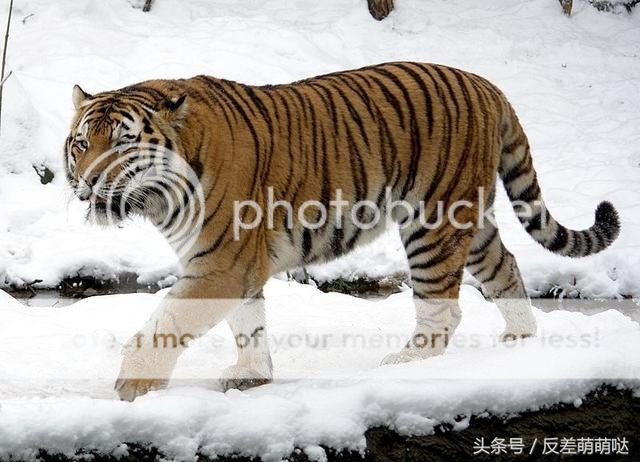
成年西伯利亚虎
補充內容 (2018-9-14 21:14):

補充內容 (2018-9-14 21:16):

成年东北棕熊
補充內容 (2018-9-14 21:19):

補充內容 (2018-9-14 21:23):

被西伯利亚虎杀死被吃掉部分肢体的棕熊
補充內容 (2018-9-14 21:25):
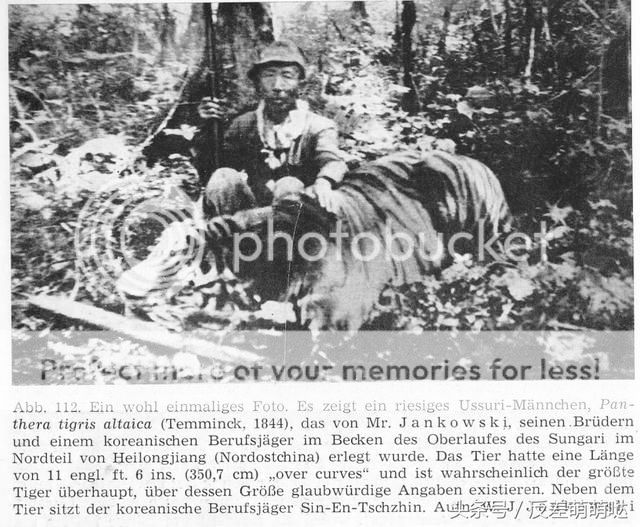
其后,西伯利亚虎被射杀
補充內容 (2018-9-14 21:27):

Source : https://kknews.cc/zh-sg/science/rp82k54.html
補充內容 (2018-9-14 21:41):
棕熊,老虎,狮子,谁最厉害?

補充內容 (2018-9-14 21:42):
補充內容 (2018-9-14 21:43):

補充內容 (2018-9-14 21:45):

補充內容 (2018-9-14 21:47):

resource : https://www.zhihu.com/question/23907013
補充內容 (2018-9-14 21:51):
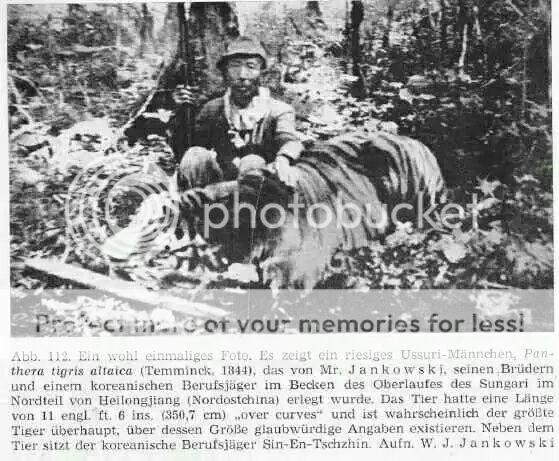
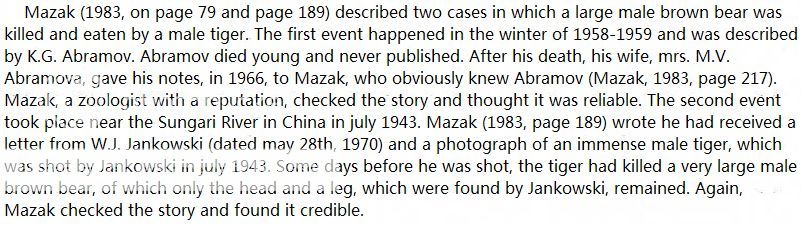
1943年射杀的超大东北虎的其他相关记录

補充內容 (2018-9-14 21:53):
補充內容 (2018-9-14 21:55):
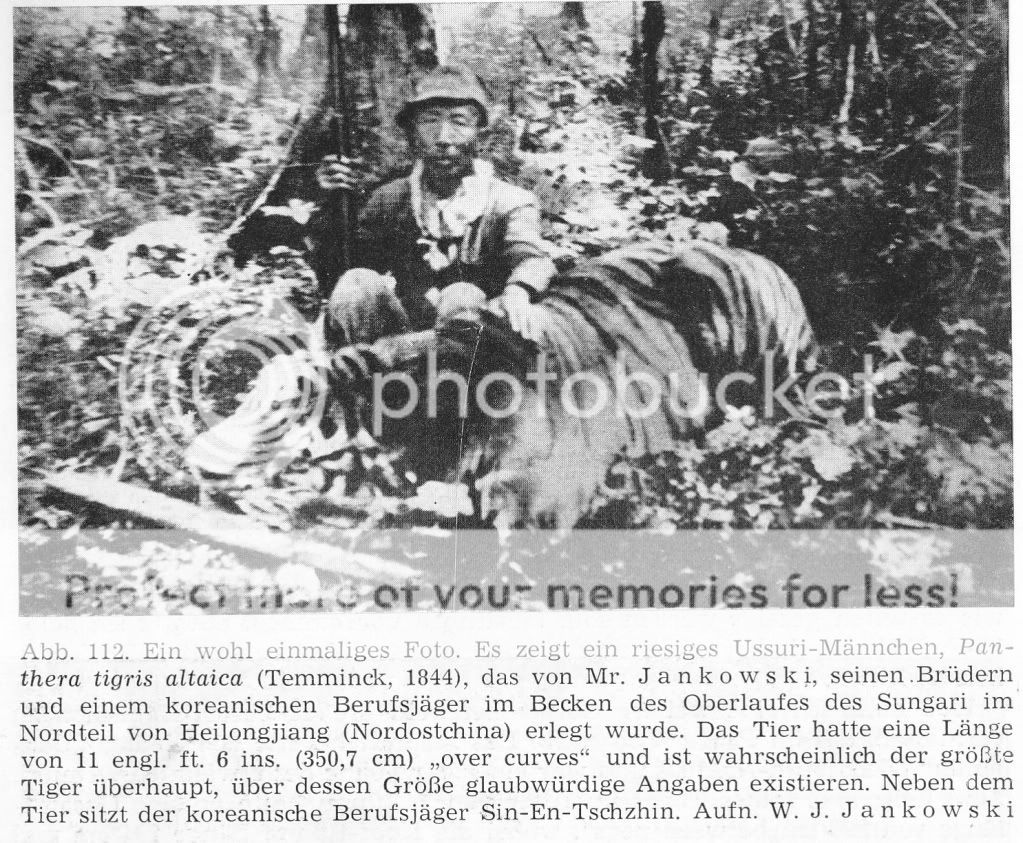
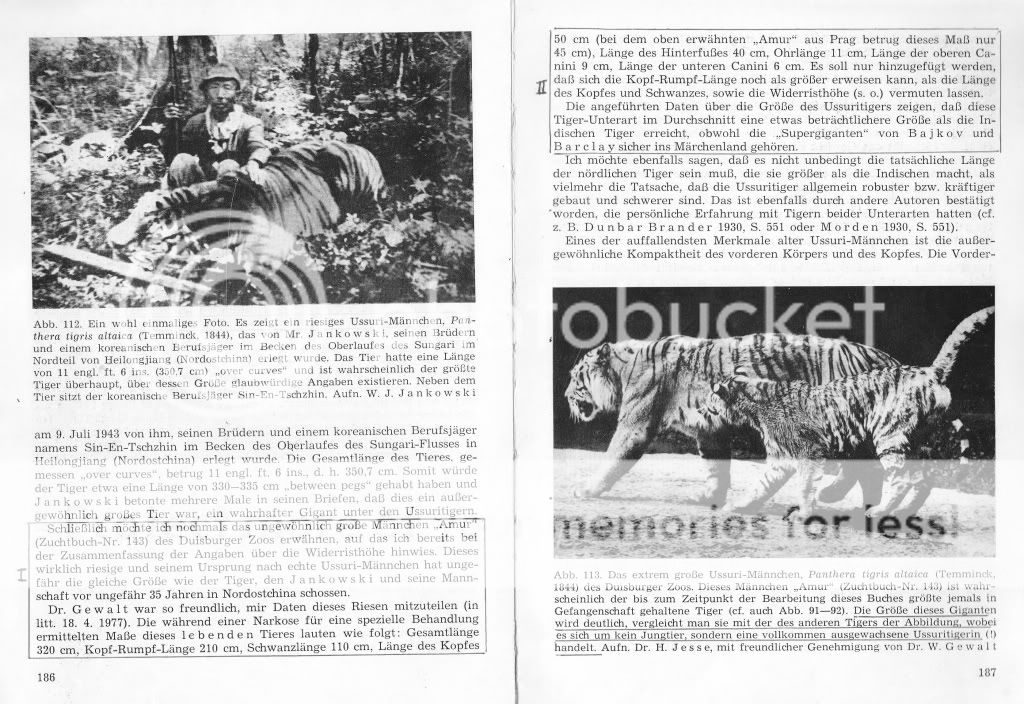
注意时间 地点 相关人都是一致的,以及虎的大小
補充內容 (2018-9-14 22:25):
補充內容 (2018-9-14 22:29):
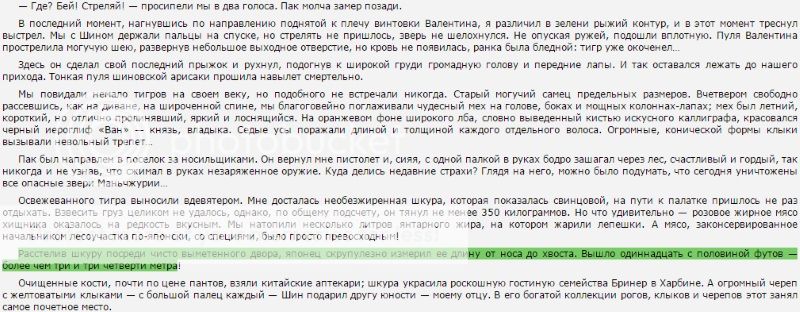
根据Warsaw找到的杨科夫斯基写的书,这个体长数据是皮长。
補充內容 (2018-9-14 22:31):
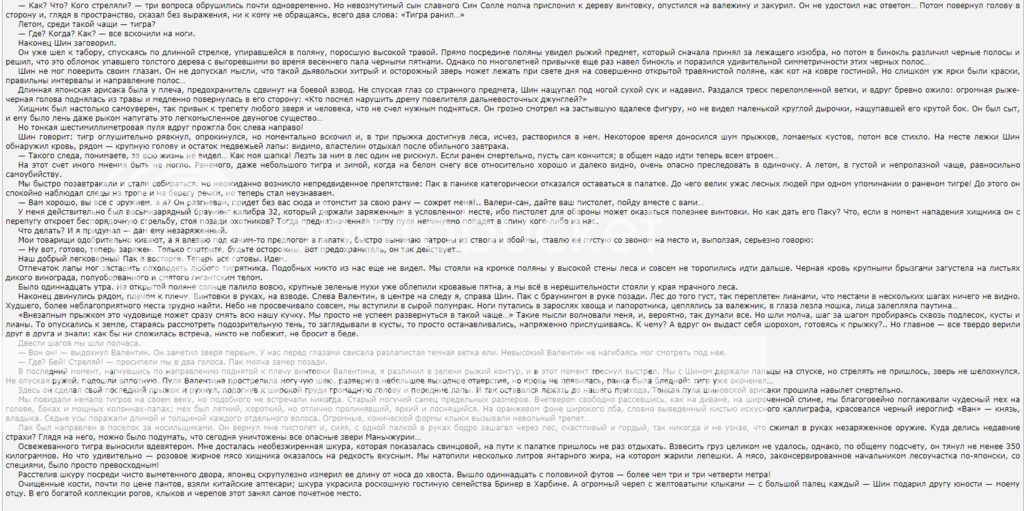
補充內容 (2018-9-14 22:33):
原圖(放大圖片)
resource : https://coollib.net/b/261421/read
補充內容 (2018-9-15 05:44):
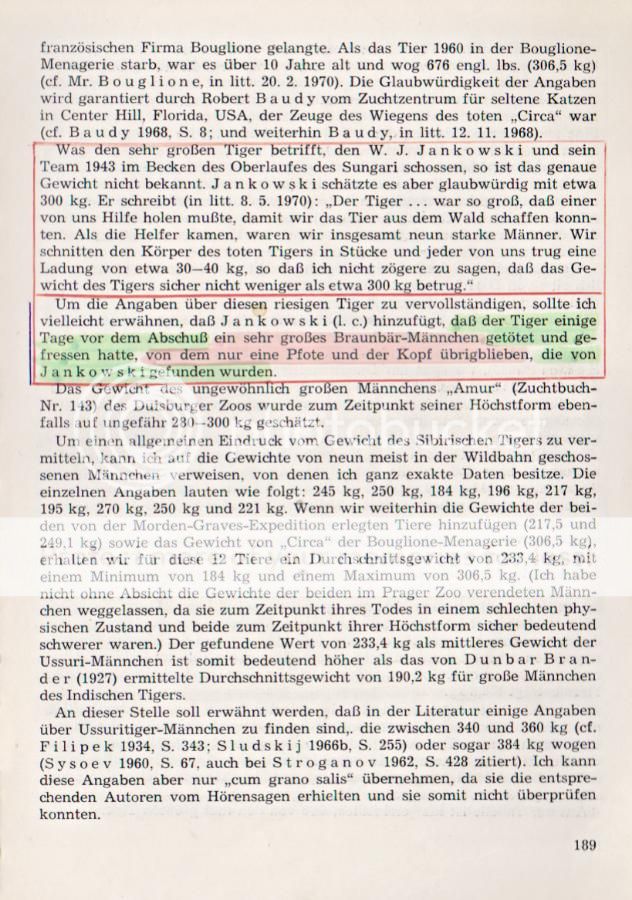
補充內容 (2018-9-15 05:49):

Resource : https://wildfact.com/forum/topic ... hera-tigris?page=54
補充內容 (2018-9-15 05:51):
TRANSLATION原圖(放大圖片)
補充內容 (2018-9-16 03:36):
西伯利亞虎wiki資料圖片 |
|




 在線雷達
在線雷達


 廣播
廣播 置頂
置頂 超級提昇
超級提昇 強效提昇
強效提昇 推舊帖
推舊帖 收嗲鳥
收嗲鳥 油顏色
油顏色